.jpg)
Mirce Science: Functionability Engineering and Management
Dr Jezdimir Knezevic, MIRCE Akademy, Exeter, UK.
Abstract: The main objective of this paper is to introduce the mechanical and industrial engineering community to the body of knowledge contained in Mirce Science for resolving, the ever present design dilemma, “Which option should be selected, why and by how much?” in respect to the work required to be done with existing resources. The most accurate answer to this design dilemma could be provided if the consequences of all feasible options of working systems could be accurately predicted in a quantitative manner, as all functionality related engineering options are routinely made, by applying proven equations of science. The solution comes from Mirce Science which predicts the motion of working systems through time by using the Mirce Functionability Equation, which enables predictions of the expected work to be done by and on the working system during a given interval of time. Hence, in the future mechanical and industrial engineers will be able to perform quantitative trade-off between feasible design options of the working systems to determine one that would yield the greatest work/benefit, for the resources available. The knowledge and skill required for the successful completion of these tasks will be provided by functionability engineering and management educated professionals, based on their experiences of working processes and abilities to apply the Mirce Functionability Equations to design options considered.
Key note presentation at DEMI2025, 17 International Conference on Accomplishments in Mechanical and Industrial Engineering, Banja Luka, Republika Srpska, 29-30 May, 2025.
Mirce Science: Impact of Windscreen Damage on Functionability Performance of Commercial Aircraft
Dr Jezdimir Knezevic, MIRCE Akademy, Woodbury Park, Exeter, UK
Abstract:Flights cancellations or diversions of flights of commercial aircraft caused by windscreen damage have significant impact on their functionability performance. Thus, this paper addresses windscreen damage as an observed phenomenon from the Mirce science point of view, which means that it is considered as a mechanism that generates negative functionability events, which compels the affected aircraft out of scheduled service. The paper briefly examines the types of damage experienced in the past to understand their physical manifestations, as a negative functionability action that could generate undesirable consequences to the travelling public and financial losses to the airlines due to the withdrawal from service of the affected aircraft. Several design and operational methods for reducing the probability of windscreen damage are briefly presented in the paper, as the potential positive functionability actions to be taken to return them to scheduled service.
Mirce Science: Impact of Bed Bugs Infestations on Functionability Performance of Commercial Aircraft
Dr Jezdimir Knezevic, MIRCE Akademy, Woodbury Park, Exeter, EX5 1JJ, UK
Abstract: Flights cancellations caused by bed bug infestations of commercial aircraft have significant impact of their functionability performance. Thus, this paper addresses bed bugs infestation as an observed phenomenon from the Mirce Science point of view, which means that it is considered as a mechanism that generates negative functionability events, which compels the affected aircraft out of scheduled service. The paper briefly examines the bed bug species to understand their physiological characteristics and life cycle phases, as a natural functionability action that could generate undesirable negative consequences to the travelling public and financial losses to the airlines due to the withdrawal from service of the affected aircraft. Several methods for eradicating bed bugs from infected commercial aircraft surfaces are briefly presented in the paper, as the potential positive functionability action, performed to return them to scheduled working processes. To read the paper click here.
Happy 55th Birthday to B747
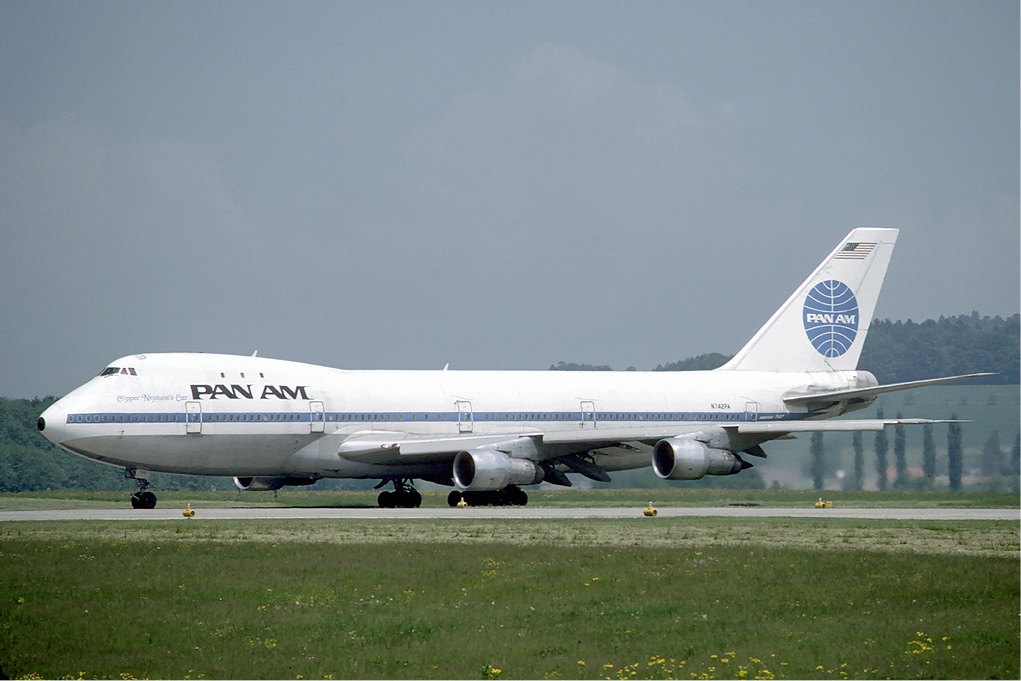
The B747, known as Jumbo Jet, is celebrating its 55th anniversary since its first revenue-generating flight (with Pan Am ). On 30 September 1968, the first 747 rolled out of its Everett Plant in Washington State, first flew on 9 February 1969, and it entered service on 22 January 1970. Now, 55 years later, only three airlines around the world operate scheduled passenger flights with the 747 (more operate cargo variants). While the B747 is seen as a crowning achievement of American aviation engineering, no US-based airlines operate it as a commercial scheduled passenger aircraft anymore.
Annals of Mirce Science 2024
It is a mechanism for Fellows, Members, students and followers of the MIRCE Akademy to exchange their knowledge, thoughts and experience related to philosophy, mathematics, science, engineering, technology and management aspects of Mirce Science. To read the Annals please click here
We wish you.........
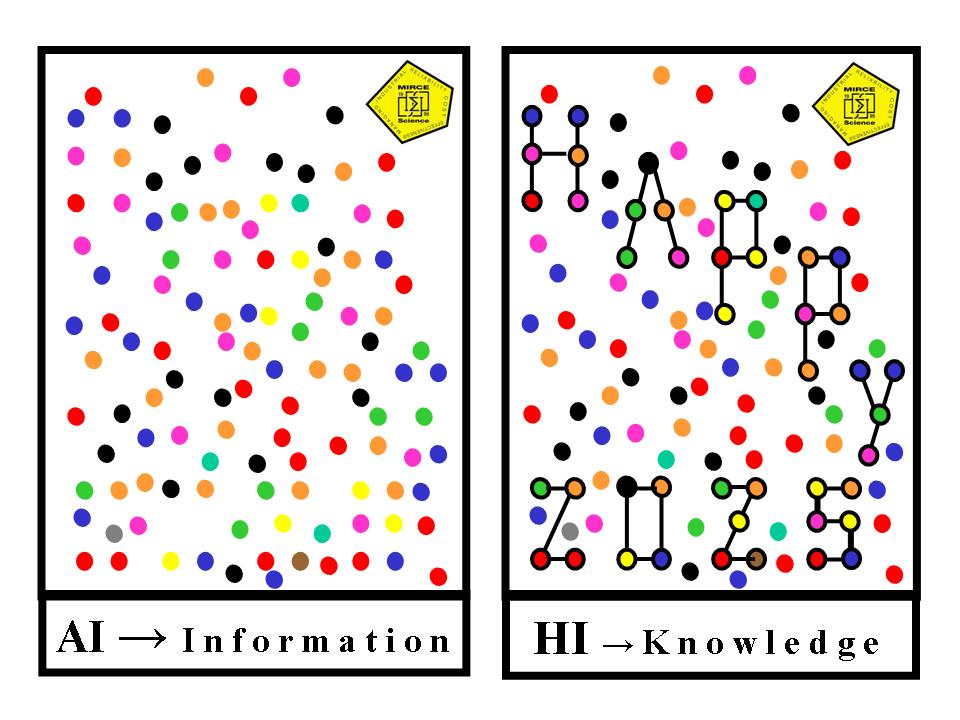
MIRCE Science: Clear Air Turbulence as a Mechanism of the Motion of Aircraft through MIRCE Space
Dr Jezdimir Knezevic, MIRCE Akademy, Woodbury Park, Exeter, EX5 1JJ, UK
http://www.mirceakademy.com/uploads/MSA2024-12-9.pdf
Formula 1 · Research & Education Centre - F1RE
Press Release: 2024 F1 Driver and Team Functionability Champions
The MIRCE Akademy has completed the Drivers and Teams Functionability Table for 2024 that revealed the following Functionability Champions:
The 2024 F1 Driver Functionability Champion is: Oscar Piastri
The 2024 F1 Team Functionability Champion is: McLaren Mercedes
Many congratulations to the winning Team and the winning Driver
Dr Jezdimir Knezevic,
Founder & President.
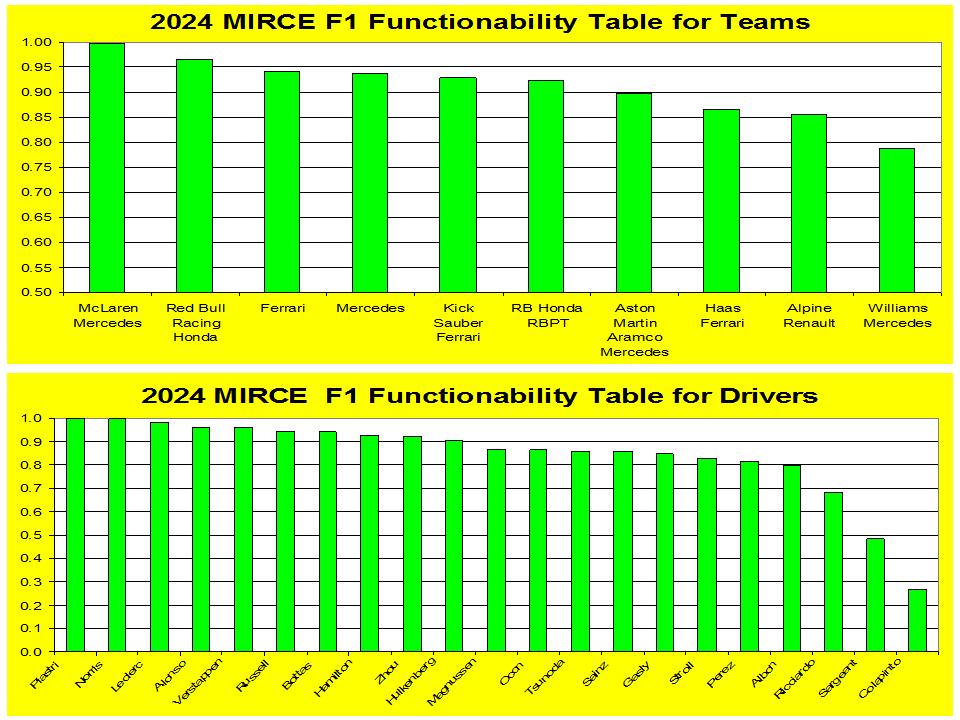
For the full information please click here.2024-F1-Season-Press Release
MIRCE Science: Functionability Management of Autonomously Working Systems on Earth Affected by Impacts of Severe Space Weather on Orbiting Satellites
Dr Jezdimir Knezevic, MIRCE Akademy, Woodbury Park, Exeter, EX5 1JJ, UK
http://www.mirceakademy.com/uploads/file/MSA2024-10-19.pdf
Remote Sensing of Natural and Man-made Disasters
Lazar Jeftic, Jezdimir Knezevic, Nevena Jeftic, Space Debris Research Lab, MIRCE Akademy, Woodbury Park, Exeter, EX5 1JJ, UK
http://www.mirceakademy.com/uploads/file/MSA2024-9-5.pdf
MIRCE Science: Lightning as an Imposing Functionability Action
Jezdimir Knezevic, MIRCE Akademy, Woodbury Park, Exeter, EX5 1JJ, UK http://www.mirceakademy.com/uploads/file/MSA2024-7-29.pdf
MIRCE Science: Shark Bite as a Mechanism of Motion of Submarine Cables through MIRCE Space
J. Knezevic, MIRCE Akademy, Woodbury Park, Exeter, EX5 1JJ, UK
http://www.mirceakademy.com/uploads/MSA2024-6-6.pdf
Space Weather as a Mechanism of Motion of Autonomous Trains in MIRCE Science
Jezdimir Knezevic,MIRCE Akademy, Woodbury Park, Exeter, EX5 1JJ, UK
http://www.mirceakademy.com/uploads/MSA2024-5-14.pdf
Pre-Determined Debris Avoidance Maneuvers (PDAMs) as Mechanism of Motion of International Space Station through MIRCE Space
Lazar Jeftic, Jezdimir Knezevic, Space Debris Research Lab - MIRCE Akademy, Exeter, UK
http://www.mirceakademy.com/uploads/MSA2024-4-26-MA.pdf
Group Replacement as Management Action in MIRCE Science
Dr J. Knezevic, MIRCE Akademy, Woodbury Park, Exeter, U.K.
https://doi.org/10.12709/mest.12.12.01.06
https://www.meste.org/ojs/index.php/mest/article/view/1371
15th DQM International Conference on Life Cycle Engineering and Management, June 27-28, 2024, the DQM Research Center, Prijevor, Serbia
Dr Knezevic was one of the invited Keynote speaker and gave a presentation entitled "MIRCE Science: Philosophy, Mathematics and Engineering". For the abstract click here
2024 Space Science Conference, 14 April 2024, organised by Africa Space Foundation
Dr Knezevic was one of the invited Keynote speaker and gave a virtual talk entitled "Scientifically Spacing: Evidence Based and Sustainable Space Program for All".
INTERNATIONAL CONFERENCE ON RELIABILITY SAFETY AND HAZARD, 21-24 February 2024, Mumbai, India
International Conference on Reliability, Safety and Hazard (ICRESH) that had established itself among the well-recognised conferences at national and international level. All ICRESH event proceedings have been published by reputed international publishers and available on many commercial outlets. Dr Knezevic has delivered one of several Keynote addresses, entitled “MIRCE Science: Solar Storm as a Mechanism of Motion of Autonomous Systems through MIRCE Space”
International Conference on Safety, Health and Analytics-Driven Governance for Sustainable Development (SHADG 2024)
The Centre of Excellence in Safety Engineering and Analytics (CoE-SEA), IIT Kharagpur is organizing this conference in collaboration with academic and industry partners, 29-30 January 2024. Aims are to provide an inter and multi-disciplinary forum for knowledge sharing, dissemination, networking and international collaboration in fields of safety, health, sustainability, human factors and analytics-driven governance. Dr Jezdimir Knezevic has been on-line plenary key note speaker on 29th January talking on MIRCE Science Archive of Safety, Reliability and Maintenance for Analytics-Driven Decisions.
GIGA Happy 2024 to ALL of you from ALL of us!
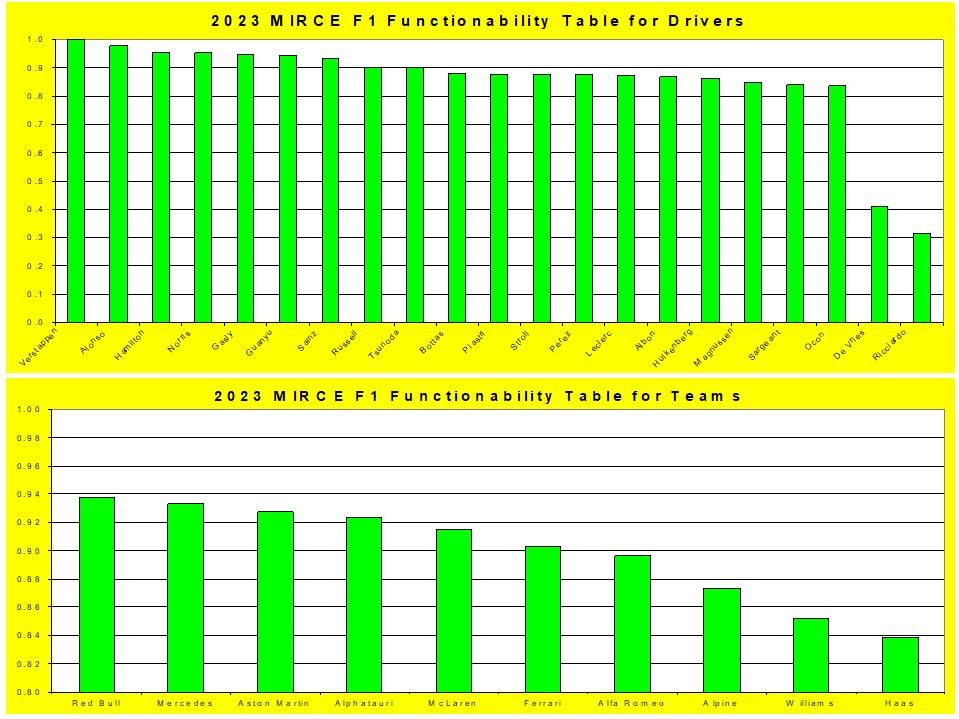
Press Release: 2023 F1RE Functionability Data Realise
The MIRCE Akademy has completed the F1 Drivers Functionability Table for 2023, based on principles of MIRCE Science, which revealed that this year Driver’s Champion is: Max Verstappen and Team's: Red Bull. For the full Table click here
33rd MIRCE International Symposium on SPACECRAFT FUNCTIONABILITY
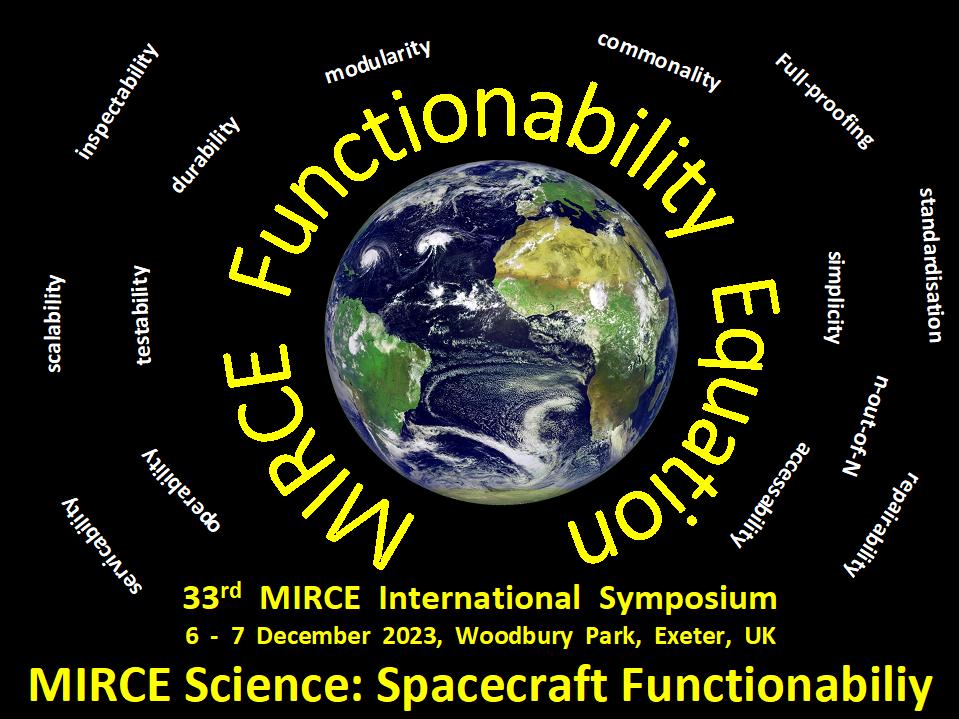
For the full programme, please click here.
Activated Orbital Debris Observations website
link: https://sites.google.com/view/orbital-debris-observations/main-page
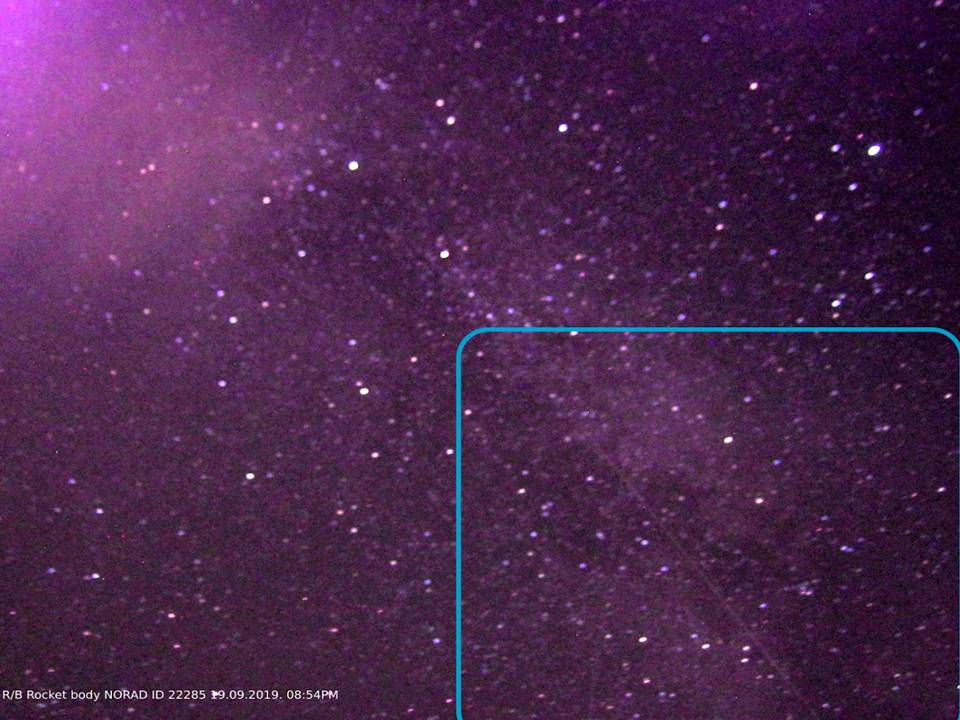
SL-16 R/B Rocket body (NORAD: 22285) 19.09.2019. Rocket body overpass can be seen with a continuous bright line. Full spectrum Canon A800. Image enhancement applied.
Interview with Dr Knezevic conducted by Reliabilityweb.com (click here) 
33rd MIRCE International Symposium on SATELLITE FUNCTIONABILITY
Call for papers foe the MIRCE International Symposium, 6-7 December 2023, Woodbury Park, Exeter, UK. For full details click here
Dr Knezevic will give a Presentation at IIPP Event
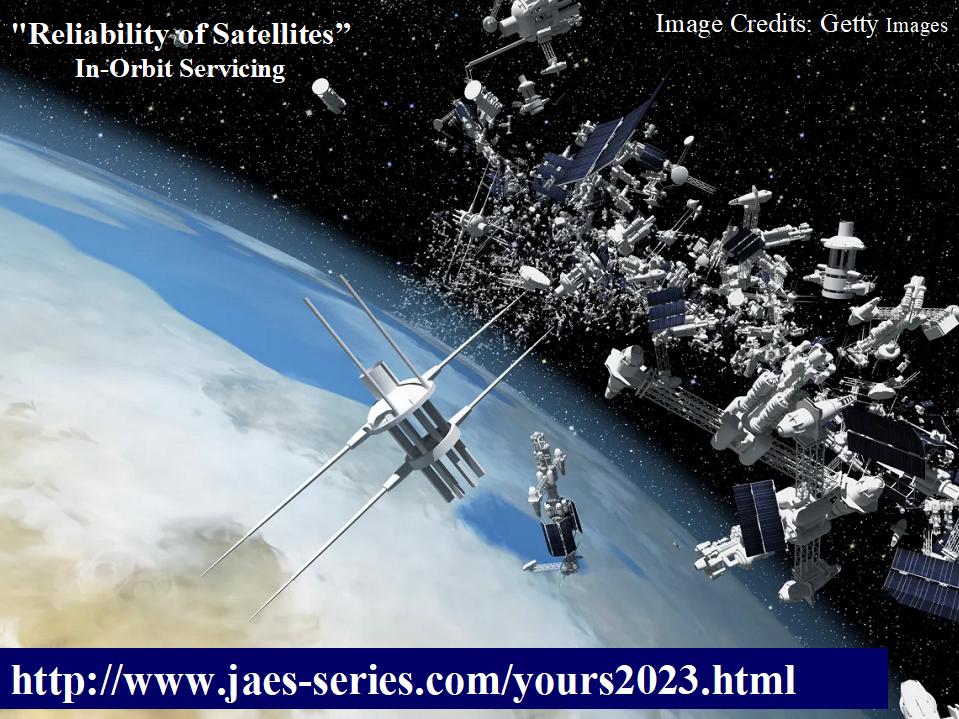
"Satellite Reliability with In-Orbit Servicing", 2nd September 2023, Faculty of Mechanical Engineering, at Belgrade University, Serbia.
Spares: Planning, Management and Obsolescence
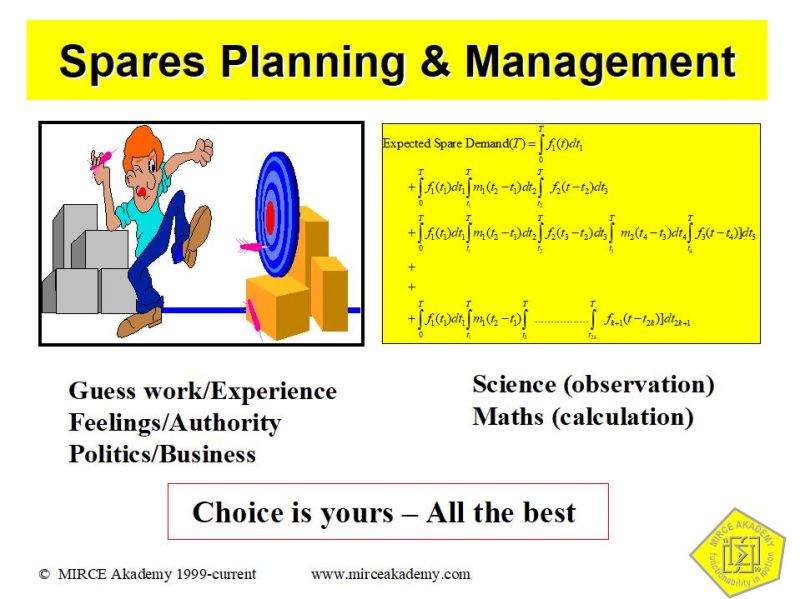
A 3 day course at Woodbury park, 22 24 august 2023. For more details click here.
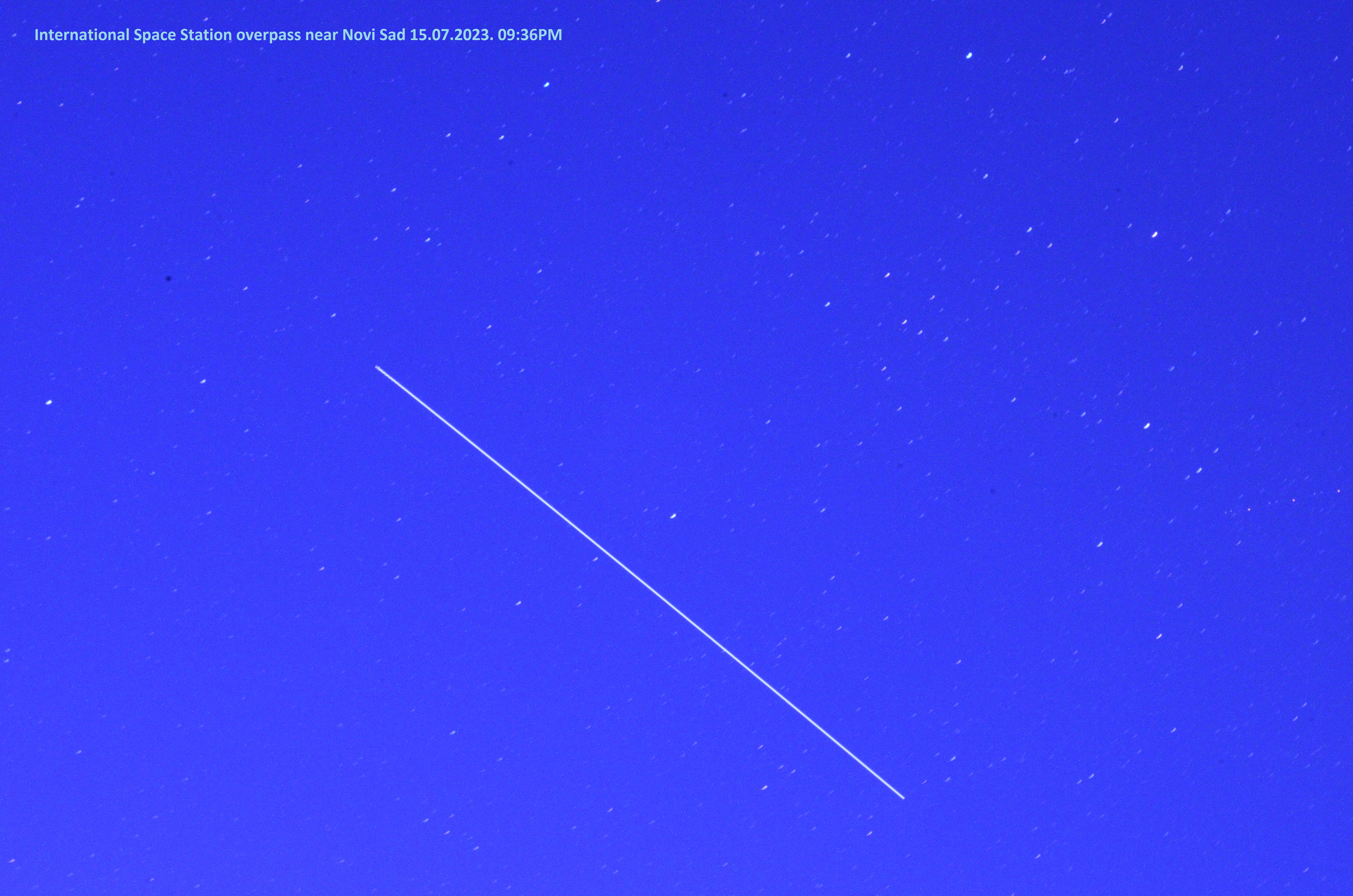
Lazar Jeftic, Science Fellow of the Akademy, has taken this photo of the trajectory of International Space Station over the city of Novi Sad in Serbia.
Programme for 12th MIRCE Science Congress - 28 -30 June 2023
During last twelve months we witnessed around 175 orbital and sub-orbital rocket launches. However, some of them have either never made it to space or failed to deploy their payloads once they got there. The common denominator for all fail missions, according to publicly available information provided by their management and sponsoring teams, was a launch anomaly. Thus, the main objective of the Congress is to address specific actions and mechanisms that prevented launched satellites from reaching the expected orbit as well as those that will reduce a probability of reoccurring.
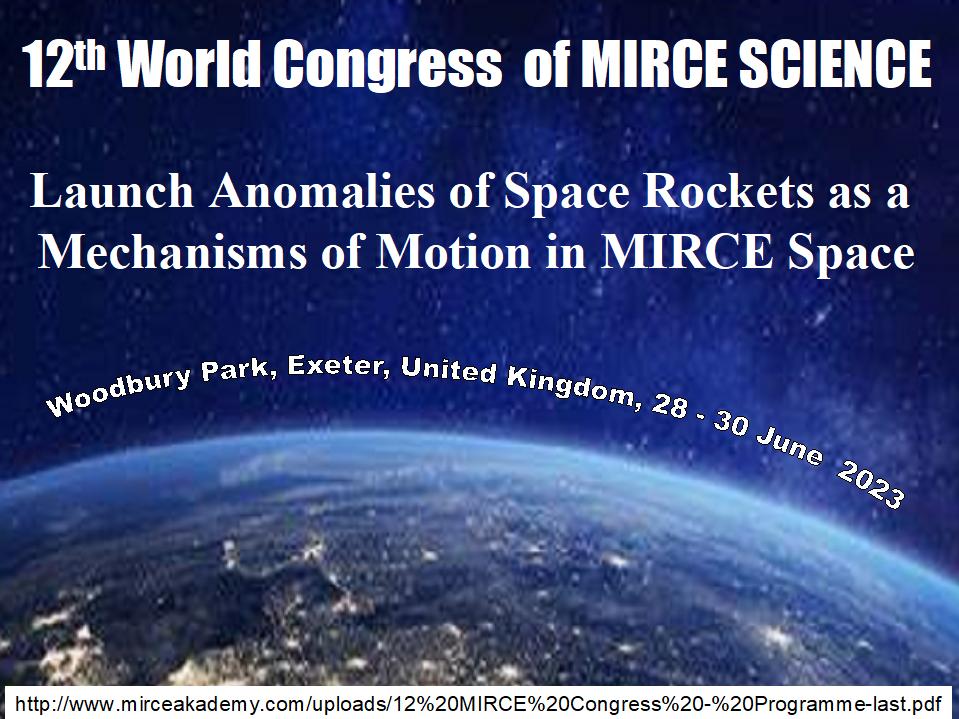
All welcome to the Congress in face-to-face format after three years of absence due to COVID-19. For the full programme please click here.
To all of you: Healthy, Prosperous & Happy 2023 from all of us!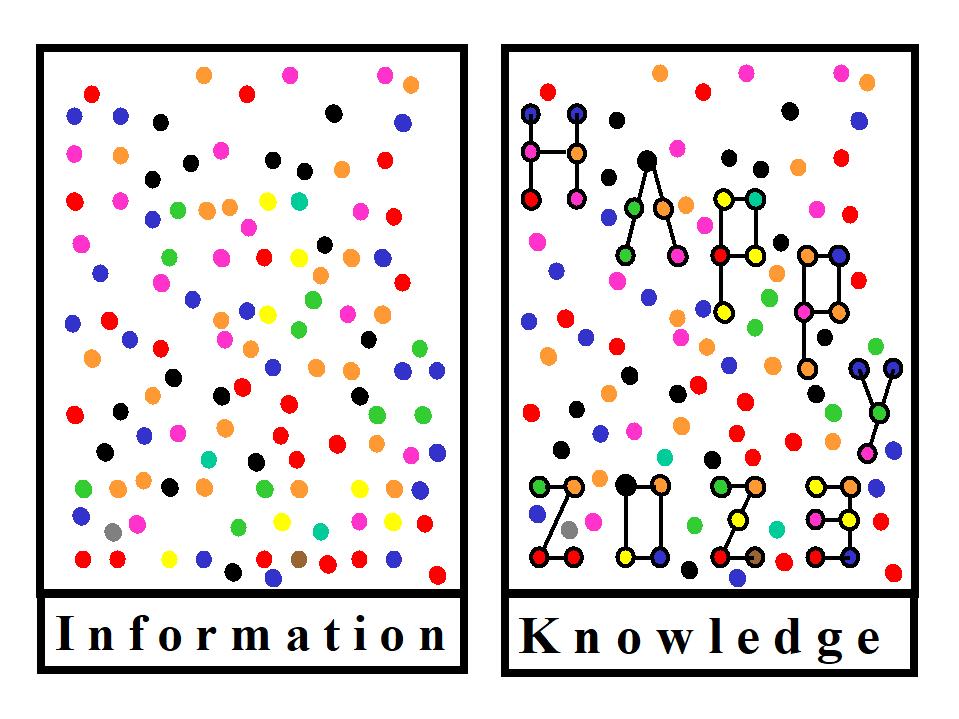
Press Release: 2022 F1RE Functionability Data Realise
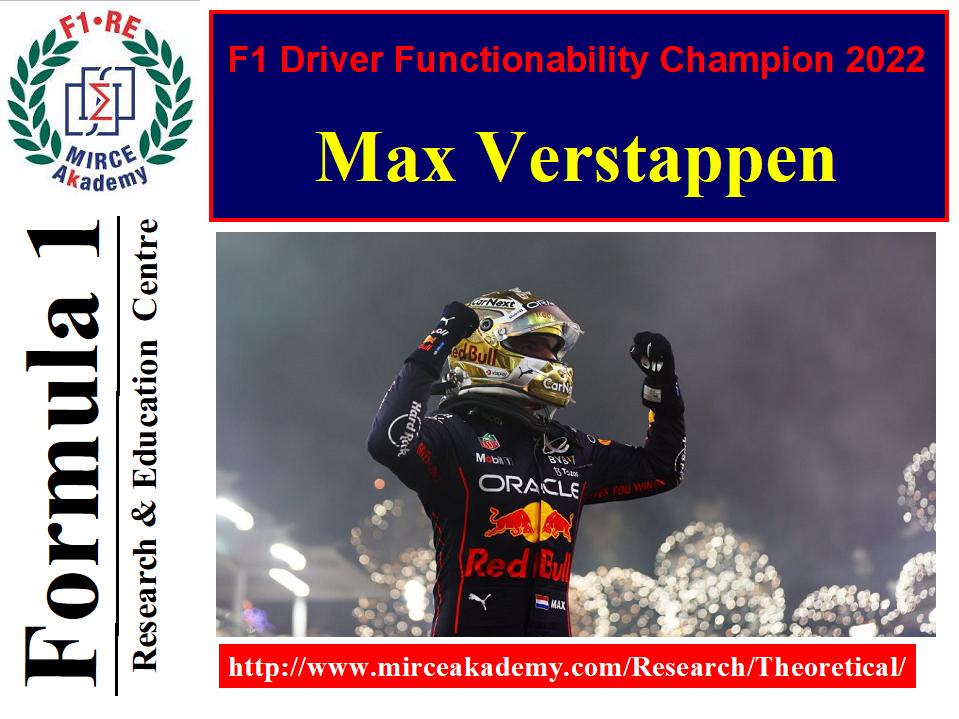
The MIRCE Akademy has completed the F1 Drivers Functionability Table for 2022, based on principles of MIRCE Science, which revealed that this year Driver’s Champion is: Max Verstappen. For the full Table click here.
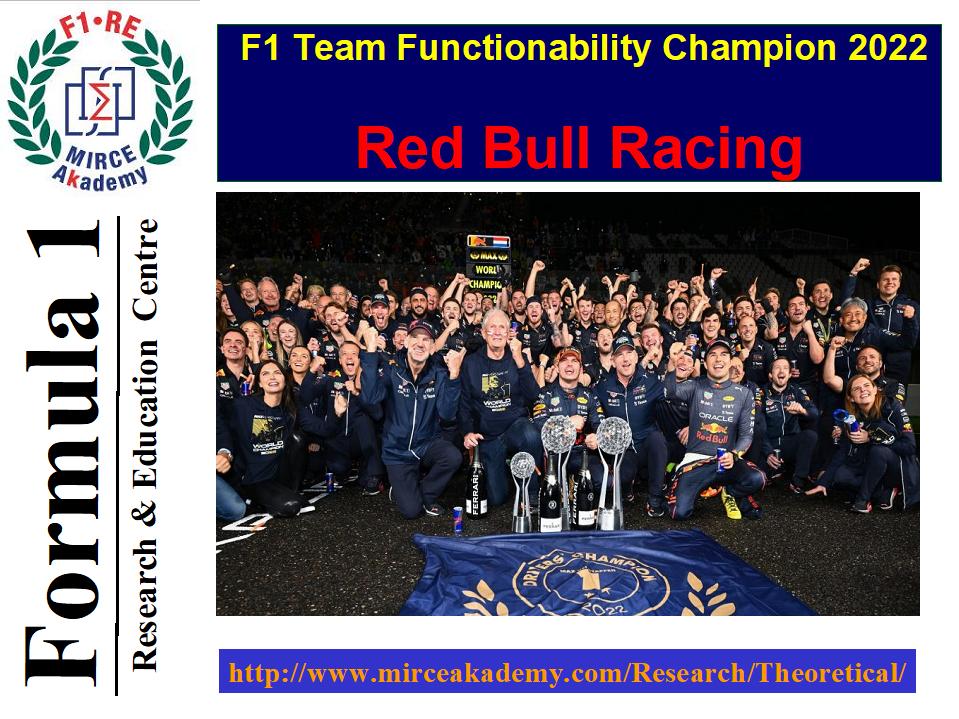
The MIRCE Akademy has completed the F1 Team Functionability Table for 2021, based on principles of MIRCE Science, which revealed that this year Team’s Champion is: Red Bull Racing. For the full Table click here!
For the full Press Release please click here or email to jk@mirceakademy.com
32nd MIRCE International Symposium
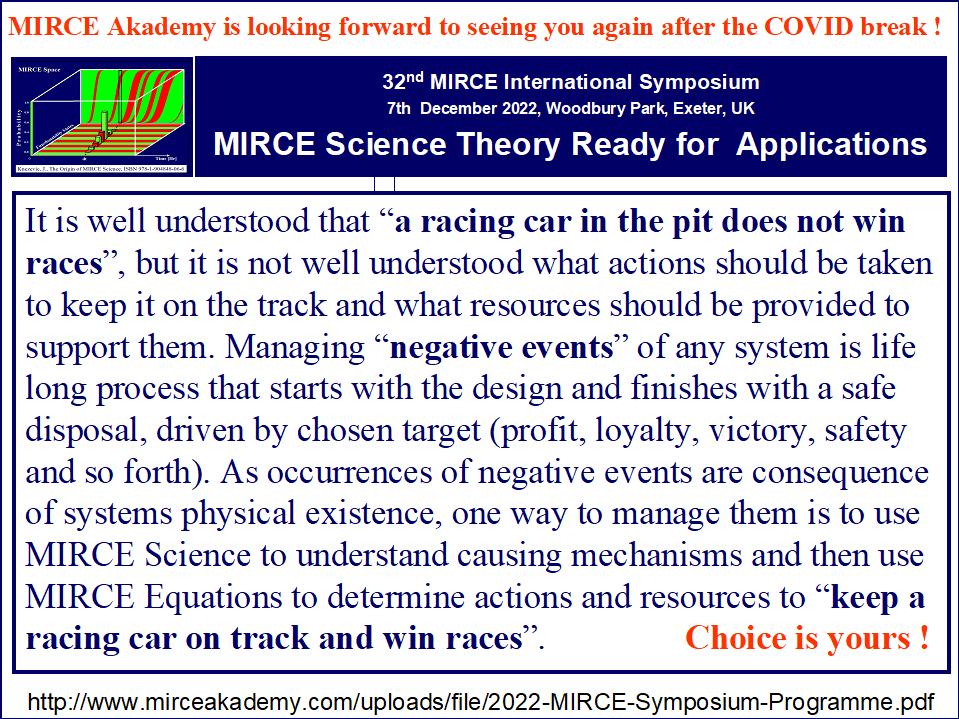
We are back to face-to-face meetings after COVID pandemic. The symposium entitled "MIRCE Science Theory Ready for Applications" will take place on 7th December 2022 at Woodbury Park, Exeter, UK. For the full programme please click here.
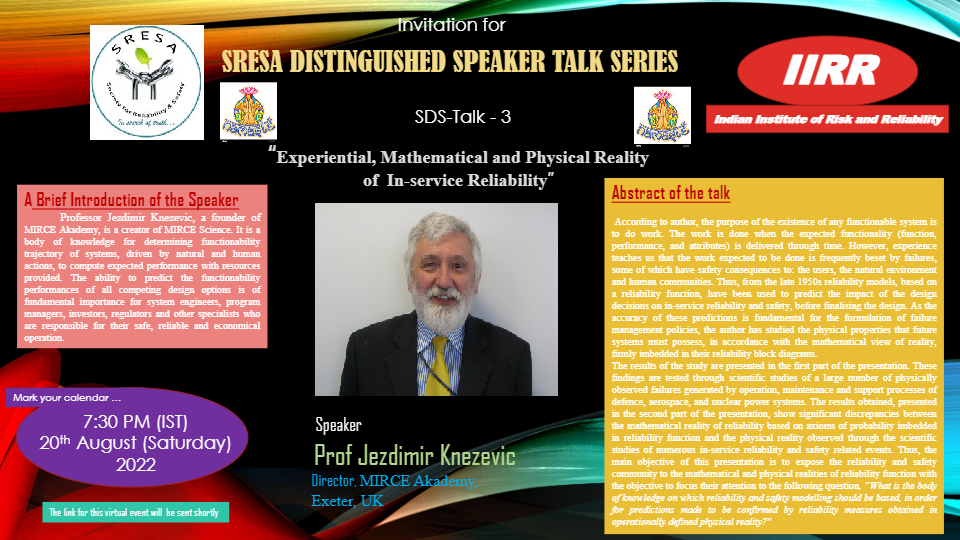
Indian Society for Reliability & Safety: 22 August 2022
Dr Knezevic will be presenting 3rd SRESA Distinguished Speaker Talk on "Experiential, Mathematical and Physical Reality of In-service Reliability".
Forum Time4.Q Conference 2- 4 June, 2022, Budva, Montenegro
Dr Knezevic has been one of the Key Note Speakers on this conference with a talk entitled "Physical and Mathematical Reality of Reliability". To see the abstract click here.
5th National Conference of Reliability and Safety, 10 -12 March, Chennai, India
Dr Knezevic has been one of the Key Note Speakers on this conference with a talk entitled "MIRCE Science Approach to the Royal Reliability Challenge". To see the abstract click here.
'Distinguished Speaker Series' on QRAMS at IITK, 15 January 2022, India
Subir Chowdhury School of Quality, at Indian Institute of Technology in Kharagpur, (West Bengal) India started the Series of Lectures presented by a Distinguished Speakers in Quality, Reliability, Availability, Maintainability and Safety. Dr Knezevic has delivered the first Lecture in this series on 15 January 2022, entitled “Mathematical and Physical Reality of Reliability”. For the abstract click here, and to watch the lecture follow the link: https://www.youtube.com/watch?v=eZ9VrSpvzpA
2021 Annals of MIRCE Science
Published by the MIRCE Akademy to facilitate exchanges of knowledge and experience between: scientific, engineering and management professionals, which are interested in MIRCE Science, from the research, practical application, modelling or consultancy point of view. To read abstracts of the papers published and other relevant information please click here.
To our: Students, Members, Fellows, Colleagues and Friends
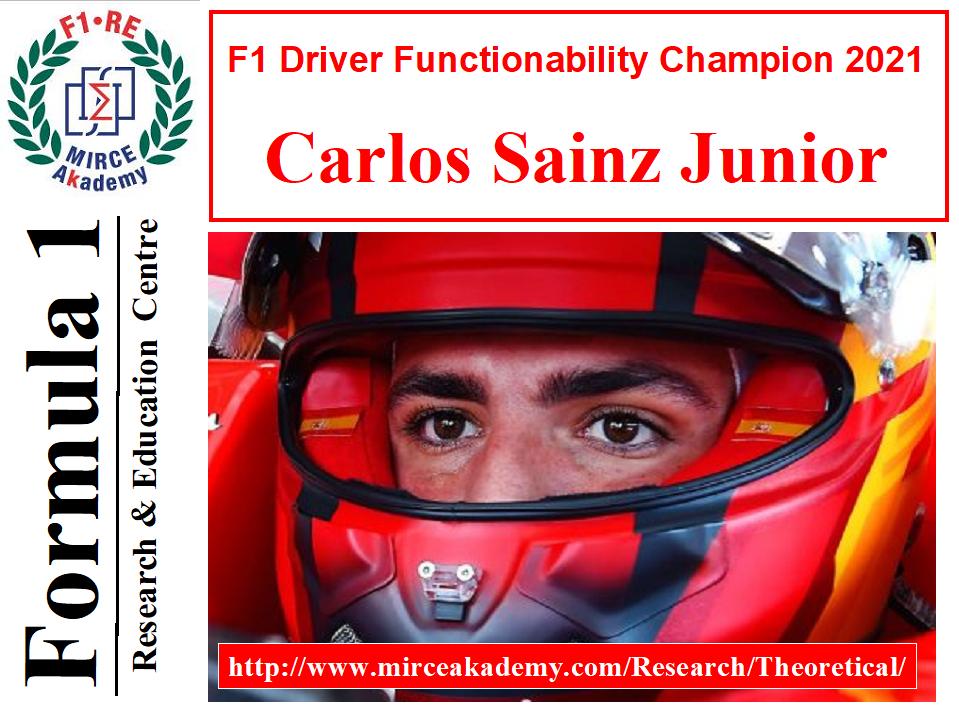
Press Release: 2021 F1 Driver Functionability Champion
The MIRCE Akademy has completed the F1 Drivers Functionability Table for 2021, based on principles of MIRCE Science, which revealed that this year Driver’s Champion is: Carlos Sainz Junior. For the full Table click here!
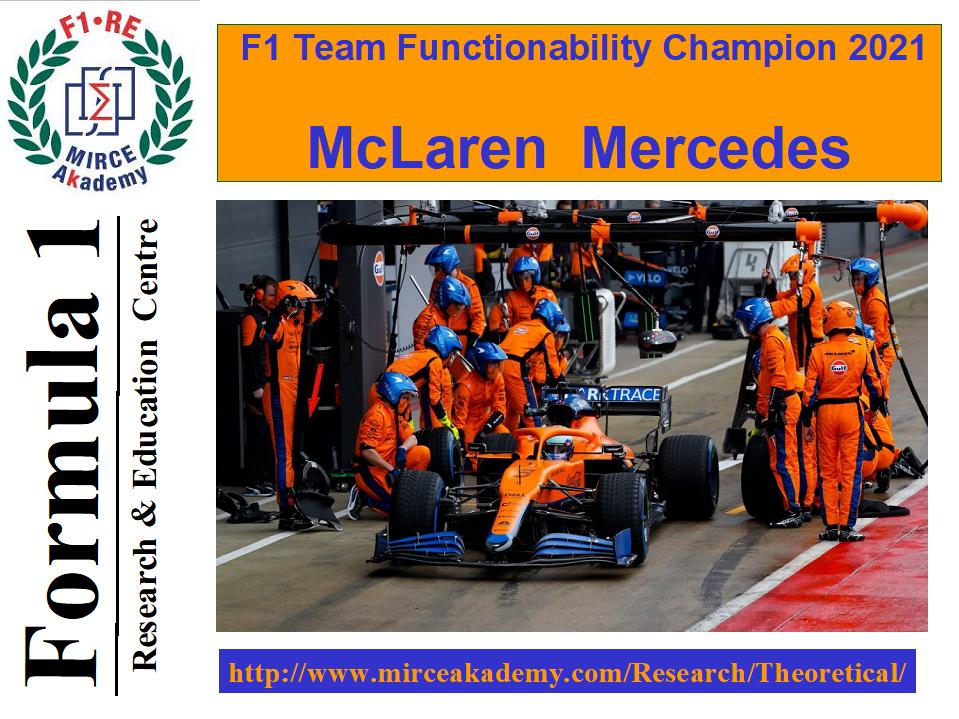
Press Release: 2021 F1 Team Functionability Champion
The MIRCE Akademy has completed the F1 Team Functionability Table for 2021, based on principles of MIRCE Science, which revealed that this year Team’s Champion is: McLaren Mercedes. For the full Table click here!
31st MIRCE International Symposium
13 August 2021
Dr Knezevic, MIRCE Akademy, has published a chapter entitled "Mathematical and Physical Reality of Reliability" in the just released book: Safety and Reliability Modelling and its Applications, a volume in Advances in Reliability Science. For the abstract click here.
MIRCE Akademy donated to the Donkathon 200 copies of the books:
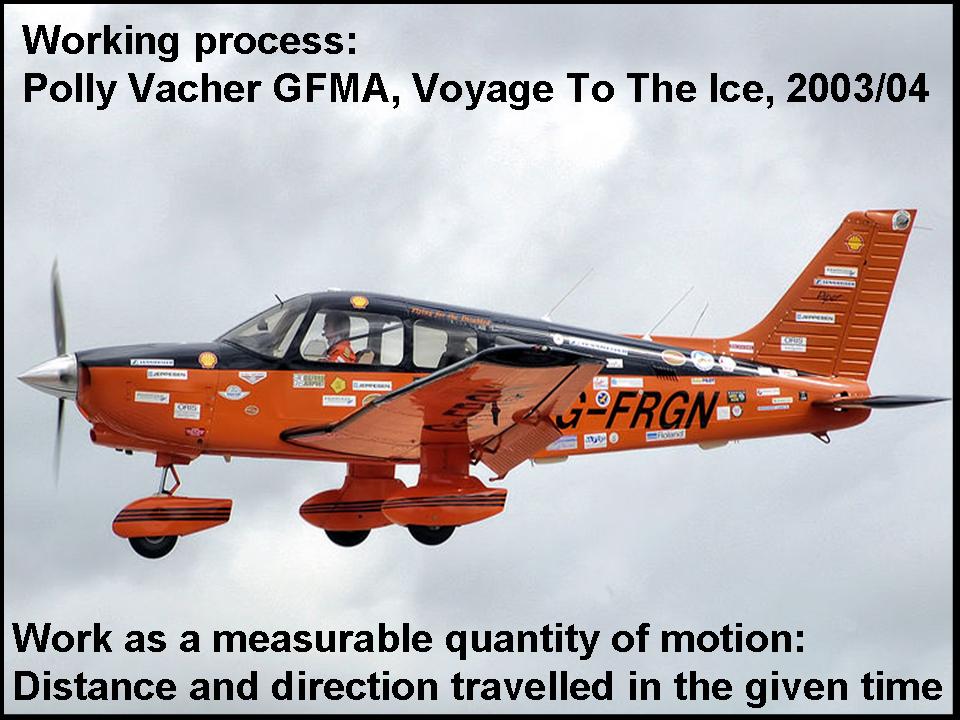
From B to B ... Polly Vacher's Global Challenge by Dr J. Knezevic
B2B/A+A, Polly Vacher's Voyage To The Ice 2003-04 by Dr J. Knezevic
The books describe Polly Vacher's world records breaking flights around the globe (horizontal & vertical-via Arctic and Antarctica), which have significantly contributed to the formulation of MIRCE Science. The books are normally sold for £10.00 and £12.00 respectively. On this occasion they will be exchanged for any donation towards Multiple Sclerosis (MS) Research fund (recommended minimum of £5.00, but not strictly applied). The books could be obtained along the Donkathon route, or via email: jk@mirceakademy.com .
For more information about the books please click here or on the picture of a book.
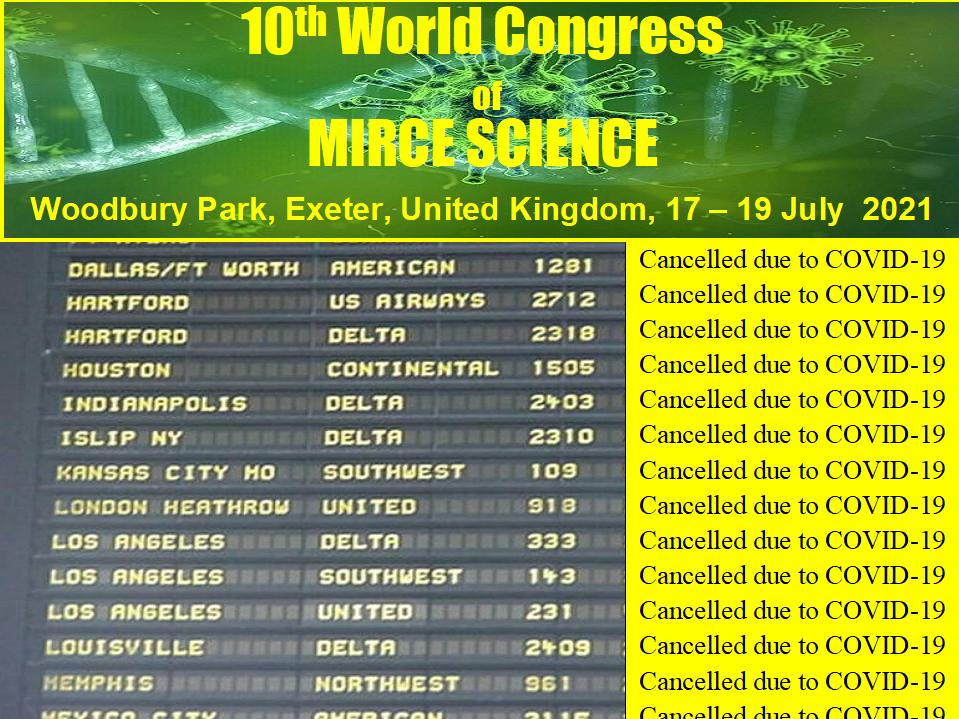
10th World Congress of MIRCE Science 2021
Due to still existing pandemic situation regarding COVID-19 the 10th World Congress of MIRCE Science will be merged with the 31st MIRCE International Symposium that will take place in December 2021.
January 2021: COVID-19 Pandemic as a Mechanism of the Motion of an Aircraft in MIRCE Mechanics
The COVID-19 outbreak has shown that pandemics, like other rarely occurring natural catastrophes, have happened in the past and will happen in the future. Although humans cannot prevent dangerous viruses from emerging, they should be prepared to dampen their consequences for the economy and all of society. The main objective of this paper is to address the COVID-19 pandemic as a novel mechanism of the motion of an aircraft in MIRCE Mechanics, as only then the most effective technological, social and economic actions can be taken by humans to deal with it. Thus, this paper is bringing together the physiological side of COVID-19 and its physical impact on the operational side of airlines in order to assist them to predict the expected positive and negative work by each aircraft type grounded. This analysis will guide them to decide what type of fleet they should have in the post pandemic times and thus secure the business existence. Link to full paper:
http://www.sciencepublishinggroup.com/journal/paperinfo?journalid=102&doi=10.11648/j.ajetm.20210601.11
2020 Annals of MIRCE Science
Published by the MIRCE Akademy to facilitate exchanges of knowledge and experience between: scientific, engineering and management professionals, which are interested in MIRCE Science, from the research, practical application, modelling or consultancy point of view. To read abstracts of the papers published and other information please click here.
2020 F1 Driver and Team Functionability Champions
Press release: The of the MIRCE Akademy has completed the Formula 1 Drivers and Teams Functionability Tables for 2020 that revealed that the following Functionability Champions:
- The 2020 F1 Driver Functionability Champion is: Kimi Raikkonen
- The 2020 F1 Team Functionability Champion is: Mercedes AMG Petronas
For the illustrative history of MIRCE F1RE Centre Awards click here.
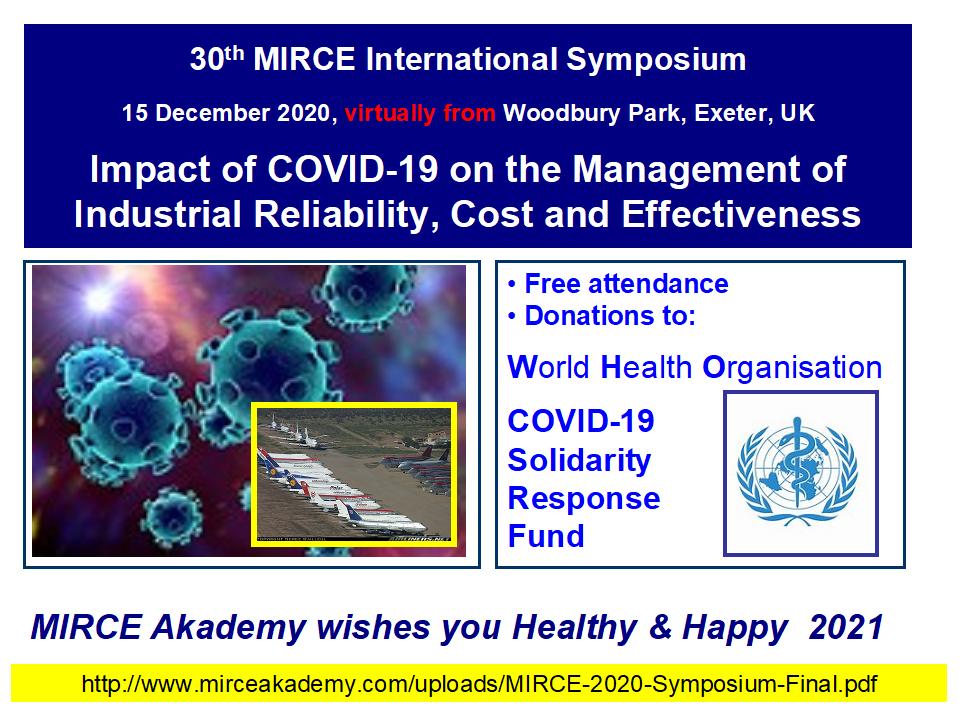
30th MIRCE International Symposium - All Welcome
31st MIRCE International Summer School
2020 Summer School was cancelled due to the global outbreak of Corona Virus, COVID-19. As preventive measures are reducing the probability of occurrences of negative functionability events, please take care and get ready for the next year Summer School.
9th World Congress of MIRCE Science
.jpg)
Physical Reality of Reliability Function - Presentation by Dr Knezevic at The Reliability Conference, organised by Reliabilityweb.com, Seattle, May 2019.
In a late 1950s, Reliability Theory was “created”. It was based on mathematical theorems rather then on scientific theories. The Reliability function for a system is determined by the reliability functions of the constituent components and their configurations within functional system. It is well-defined analytical functions obeying the axioms and theorems of mathematics. Systematic research performed by the author during several decades of the observable physical realities of in-service/operational life of functional systems in aerospace, military and nuclear power industries have clearly shown that determines from the mathematically implied reality. The presentation goes through a list of physically observed and undeniable facts that seriously impact the accuracy of the reliability predictions currently provided through reliability theory. To see the presentation follow the link: